
Please Stand By
With a stellar pod-cast to recommend in the meantime.

Maybe it’s a generational thing, my aversion to the multi-coloured bars. This was Gen X’s version of the hated Netflix error code:

Whether Saturday morning cartoons or after-school soaps (a.k.a. homework time), those bars were worse than any cereal commercial viewed for the 600th time. The signal could last for seconds, minutes, hours. A kid never knew—yet whenever it appeared, one sensed a grave injustice.
With regret and apologies, I’m beaming out that very signal month. The reason is not recent events—oh no, there’s plenty for people of good character to resist these days. Whether it’s Maritime walks in the woods, new “hate crimes,” an impending cull of healthy ostriches, or digital incursions into the private lives of Britons, the offences against the people keep piling up.
No, the plea to stand by stems from a new position that came up unexpectedly this summer. I’m teaching political science at the University of Lethbridge: nestled in the coulees of southern Alberta, it’s my father’s hometown and one of my favourite spots on the planet. This fall, I have the privilege of introducing students to political theory and discussing the uneasy co-existence of politics and religion, with three further courses scheduled for spring and summer.
My cup runs over, in other words—and the effort not to spill too much good wine has me hopping. I’ve never been one to draft up posts hurriedly for this series either, so request patience from readers as I adjust.
One happy byproduct? The preparations have given me an opportunity to revisit works in political philosophy that will certainly inform this series in the future. One such classic is by John Locke, the seventeenth-century thinker who helped usher in the Glorious Revolution of 1688, establish the principle of parliamentary supremacy, and curb the power of monarchs for centuries.
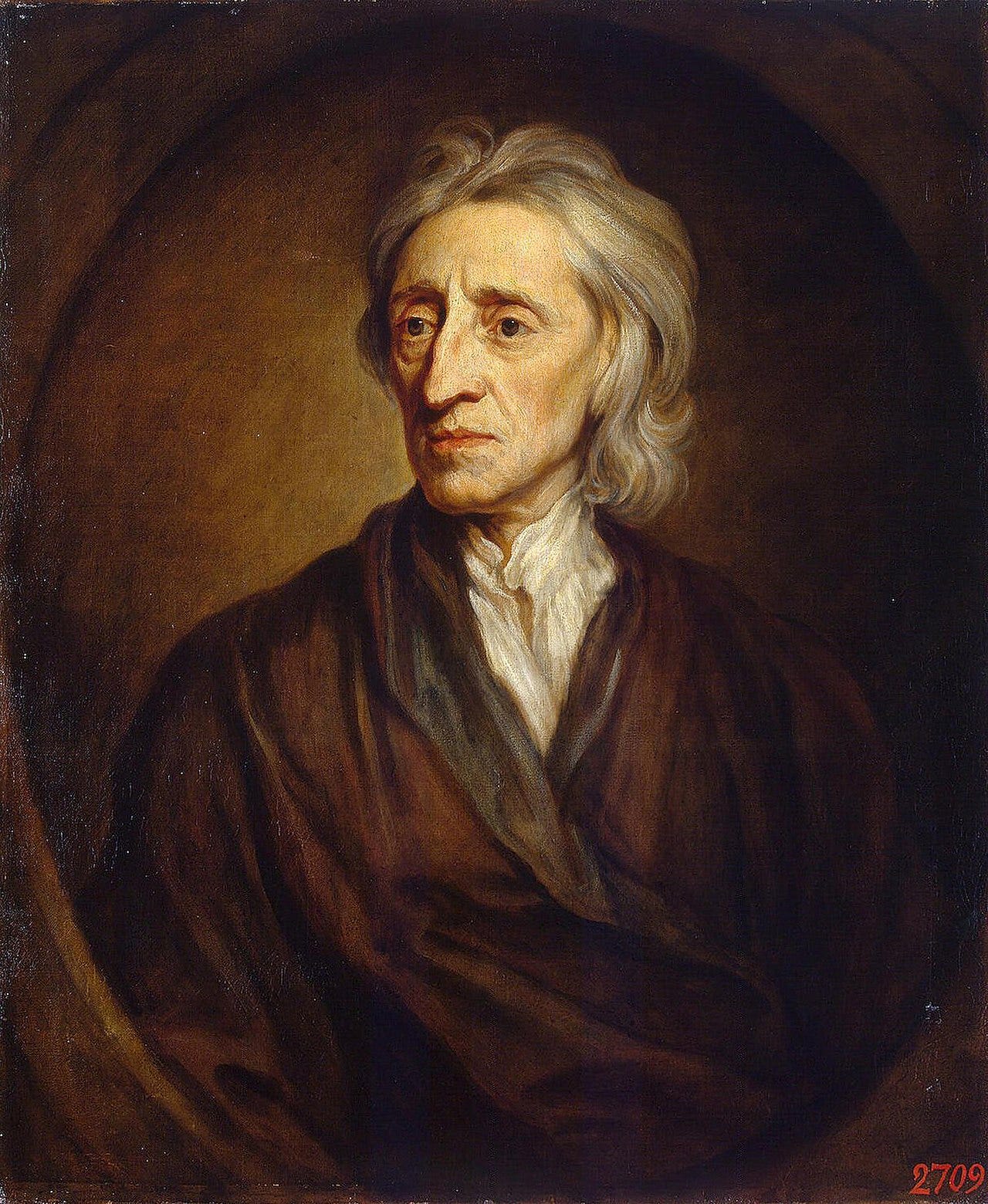
The Englishman had this catchy idea: that government exists to preserve the life, liberty, and property of those who consent to be ruled. In the final few chapters of his Second Treatise of Government, he further lays out a “right of resistance” as well as ways the people can assess if their government has set itself in a state of war against them.
Locke’s political theory is credited with helping spur the American Revolution a century later. Together with his predecessor Thomas Hobbes, he set out the basic tenets of social contract liberalism—the primacy of rights and rule of law—to which our political institutions still claim adherence today.

Actually Existing Post-Liberalism?
Which brings me to this month’s recommended listening:
Political theorist Nathan Pinkoski, a recent guest of Shawn Whatley’s Concepts podcast, argues that whatever remnants of liberalism our political institutions once reflected are behind us. The past three decades have seen a “quiet revolution” toward post-liberal ideals: notably, the fusion of state and society and collapse of the private sphere into the public.
Pinkoski’s diagnosis is compelling, one I’ve witnessed at close range in the Canadian federal government. Policy Horizons Canada’s website, for example, is rife with calls for “whole of society approaches” to wicked problems, presented as matters of public administration rather than political resolution in legislatures. In prior decades, such calls would have brought vigorous objections to a totalitarian-like Gleichschaltung. Yet such objections are rare in Canada. Pinkoski helps us orient us to where we are at.
The interview is just one contribution of Shawn’s stellar Concepts podcast. An Ontario physician and senior fellow of the Macdonald-Laurier Institute, Shawn helped create the COVID Misery Index comparing the performance of 15 advanced countries in protecting the health and prosperity of their citizens (spoiler alert: Canada did not perform well).
His latest quest is for a conservatism worth defending, one that defends us against a post-liberal state. He is a born pod-caster, prodding political philosophers, journalists, physicians, and business people alike with his signature curiosity and humility. His voice and guests are a welcome addition to our national discussion.
With that recommendation and thanks—

Suggested Listening
Shawn Whatley, Concepts #42, Nathan Pinkoski: Actually Existing Postliberalism. July 14, 2025.
Great news, Jodi. How timely to be teaching political science in Alberta. No doubt you'll inspire your students with lively debates on the role of government -- and your readers here as well. Thanks for the podcast tip!
Sure glad you enjoyed Nathan—he has shifted my thinking also. And I really appreciate your encouragement on the podcast! Thank you so much. I’m still using your comment — the ‘non left’ — that you shared when you were on. Thanks again for presenting such a thoughtful, smart, and winsome side of the non left. 🙏